The international political landscape is changing at an unprecedented pace, with growing geopolitical tensions increasingly shaped by energy prices and critical raw materials. The European Union is facing mounting pressure not only to stabilise energy prices, but also to strengthen its strategic autonomy and internal resilience. In order to withstand external shocks and systemic risks, Europe must deepen cross-border energy integration, accelerate electrification, and coordinate investment decisions at the EU level.
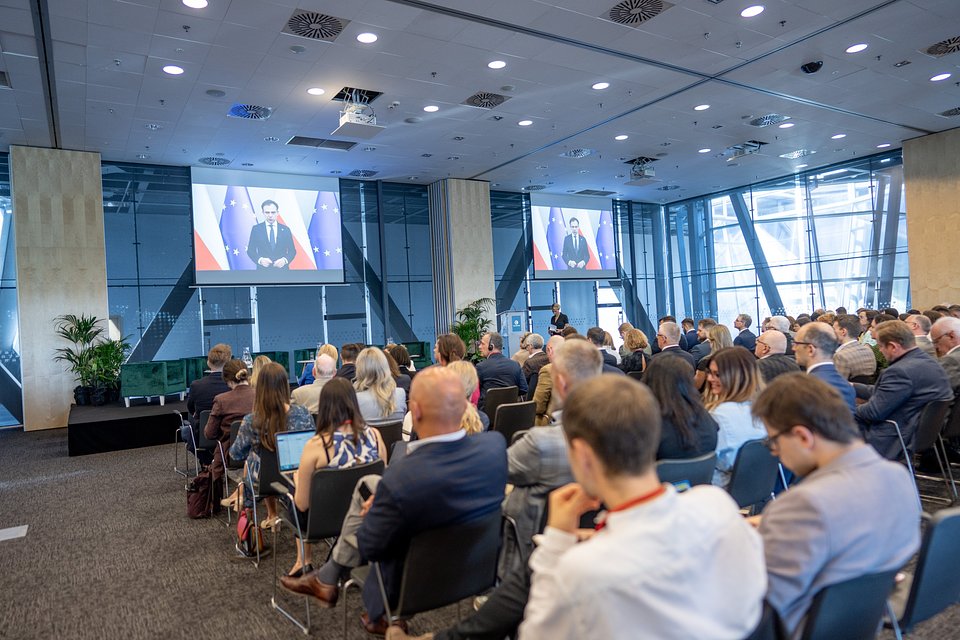
Remarks by Andrzej Domański, Minister of Finance and Economy.
Once again, we have seen that energy policy is no longer solely the domain of the energy sector. It has become one of the most important factors determining the pace of economic growth, the investment attractiveness of countries, and ultimately the future of European industry. That is why I see the energy transition not as a cost, but as a driving force for the Polish economy and one of the main engines of growth in the decades ahead. We must remember that the energy transition cannot be carried out separately from industrial policy. Without a strong industry, there will be no effective transition. And without an effective transition, it will be difficult to maintain a competitive industry in Europe.
– Andrzej Domański, Minister of Finance and Economy
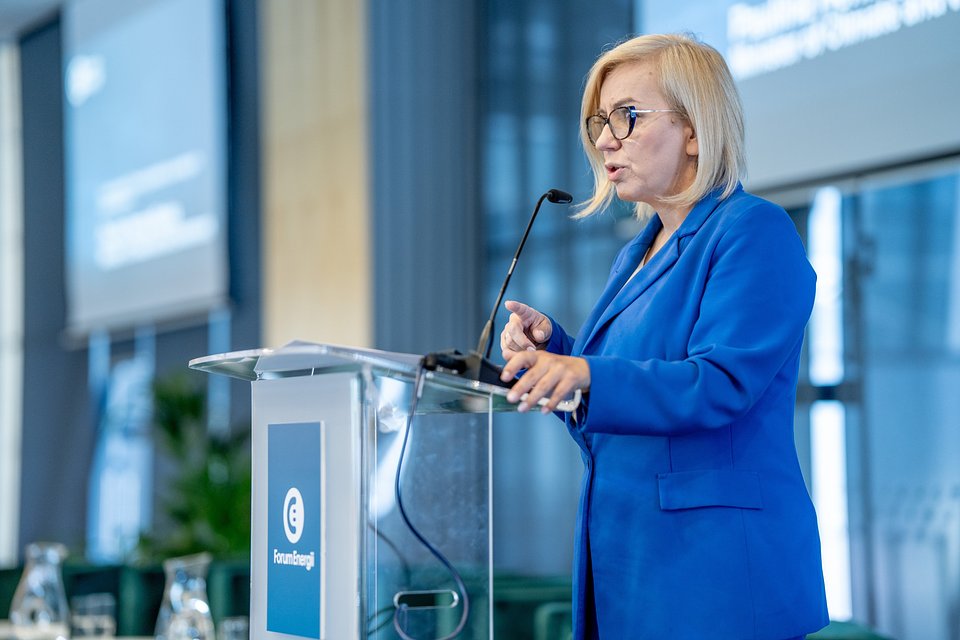
Remarks by Paulina Hennig-Kloska, Minister of Climate and Environment.
Encouraged by the recommendations of the Energy Forum, we are working on a new version of the programme — one could say a new ‘Clean Air’ programme. I really like the name ‘Warm Home’. In order to accelerate the transformation of households, we have reorganised the ‘Clean Air’ programme and will continue improving it so that it reaches the widest possible group of beneficiaries and becomes more accessible and easier to implement. This is extremely necessary. I would like to thank the President of the Energy Forum, because work on this programme began with our joint meeting. We will be able to share more details soon.
– Paulina Hennig-Kloska, Minister of Climate and Environment
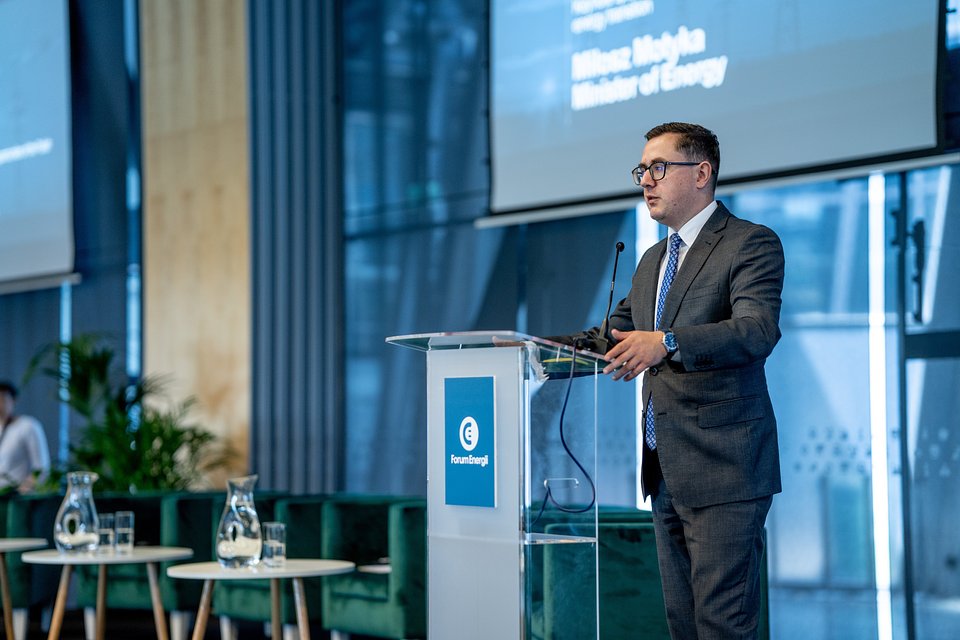
Remarks by Miłosz Motyka, Minister of Energy.
We are at an exceptionally challenging moment. Since the escalation of conflicts in the Middle East, Europe’s bill for fossil fuel imports has increased by more than €40 billion, and these costs continue to rise. This crisis has been an extremely expensive lesson, but its message is clear: we must move away from dependence on fossil fuels and accelerate the development of clean energy. The sooner we draw conclusions from this and communicate them effectively across Europe, the sooner we will be able to reduce energy prices for our citizens.
– Dan Jørgensen, European Commissioner for Energy and Housing, European Commission
Panel I: Strategic Direction for Europe’s Energy Resilience
- Cooperation and redefining security – the discussion addressed the process of moving away from Russian fossil fuels, while representatives from Germany identified potential areas of cooperation with Poland, including coal phase-out and joint capacity markets. To increase Europe’s resilience and achieve climate objectives, both a common strategy and closer cooperation between countries are needed, based on improved infrastructure interconnections, the removal of regulatory barriers, and dialogue between public administration, business, and society.
- The role of coordinated action – representatives of the European Commission highlighted lessons learned from cross-border projects, while the Energy Community emphasised the importance of integration with neighbouring countries outside the EU (Ukraine, Moldova, and the Western Balkans). There was broad agreement that there is no turning back from the energy transition, and that the next crisis must serve as a driver for deeper coordination — for example, through the sharing of reserves and joint network planning.
- Bottlenecks and market destabilisation – the greatest challenge remains reducing energy prices while simultaneously advancing electrification. Electricity grids are currently a major bottleneck for change, as infrastructure development is not keeping pace with the connection of new renewable energy sources and the growing demand for electricity. Experts warned against short-term national price protection schemes. Although such measures provide temporary relief, in the longer term they distort the market and discourage investors from financing the flexibility solutions necessary for the energy system.
Panel II: Implementing Change – Transformation Priorities for Poland and the EU
- Costs under scrutiny: Wanda Buk (Energy Adviser to the President of the Republic of Poland) emphasised that the pace and costs of change are a source of concern for society. Continuous monitoring of costs for end consumers is necessary, as is designing support mechanisms that do not place excessive burdens on the state budget.
- Energy-intensive industry under pressure: Mirosław Motyka (President of the Chamber of Industrial and Commercial Metallurgy) identified the steel industry as a leader in industrial electrification, while stressing that without an appropriate pricing policy for energy-intensive sectors and genuine compensation for CO₂ emission costs, European — including Polish — industry will lose competitiveness.
- Financing infrastructure: Grzegorz Onichimowski (President of PSE) noted that the capacity market, which protects the system from capacity shortages, generates costs on consumers’ bills (the capacity charge). He suggested that, in order to remove these burdens from consumers and finance grid investments, a dedicated EU mechanism similar to SAFE for the energy sector would be beneficial.
- The social dimension of the transition: Magdalena Młochowska (Director Coordinator for a Green Warsaw) highlighted the risk of reducing the debate solely to economic indicators. For city residents, the most important benefits and motivation for change remain clean air and improved quality of life.
- Capital efficiency: Grzegorz Rabsztyn (Head of the European Investment Bank Group Office in Poland) recalled the role of the European Investment Bank in financing challenging projects, including those supported through the Modernisation Fund. He pointed to the need for better communication of the benefits arising from the EIB’s low-cost financing, which directly translates into lower costs of grid development.
- Regulatory challenges and the voice of the market: Renata Mroczek (President of the Energy Regulatory Office) assessed that price interventions must be precisely “tailored” to specific needs. The regulator’s role is to balance the interests of the industry and consumers, who should bear only justified system costs. As consumer needs vary, financial support should not be universal — it should be targeted precisely at those who need it and who are not yet benefiting from other forms of assistance.
- The role of the commercial sector: Grzegorz Lot (President of Tauron Polska Energia) highlighted a paradox: while natural gas remains a widely used heating source, a simple switch to a dynamic electricity tariff could reduce electricity bills by 20%. He pointed to the need to develop flexible offers and emphasised the role of state-owned companies in reducing costs for end consumers.
Tobiasz Adamczewski, Vice President of Forum Energii